

Why we print in plant-based PLA
A short note on why we picked plant-based PLA over ABS, PETG, and resin — and what the trade-offs actually feel like in the studio.
When we started prototyping SIZUKO pieces, we tried every material our print farm had on hand — ABS, PETG, resin, polycarbonate blends. Each had a reason to like it.
ABS is tough, but it warps on long prints and smells like a hardware store. PETG is forgiving, but the surface finish is too plastic-shiny for what we wanted. Resin is beautiful and brittle, and the waste stream is a chemistry problem we did not want in a small Bangalore studio.
The case for PLA
Plant-based PLA is, chemically, the simplest of the bunch: fermented plant sugars polymerised into a printable filament. It is not the toughest plastic in the world. It is the one that matches how we actually make, and how these objects actually live.
It prints at lower temperatures, so the studio uses less energy. It does not off-gas styrene or acetone. And when a piece reaches the end of its life, it composts under industrial conditions instead of sitting in a landfill as a petroleum souvenir.
What we trade away
Honesty time: PLA is not for everyone. A SIZUKO piece left on a car dashboard in May will soften. It is not dishwasher-safe. If you need a planter that lives outdoors in the monsoon, this is not that planter.
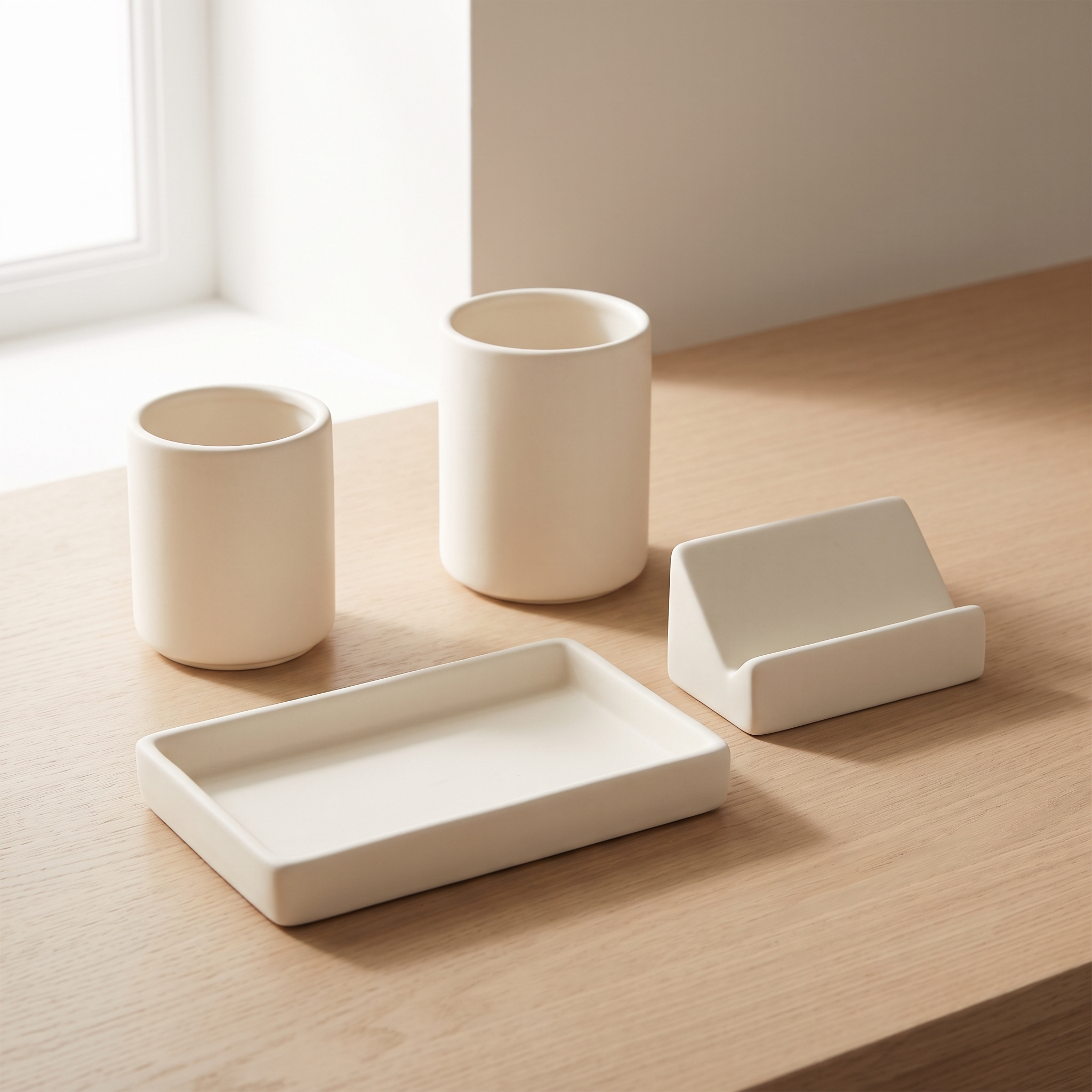
For pieces that live on desks, shelves, and mantels — which is most of what we make — PLA is exactly right. Quiet, considered, and made from sugarcane instead of oil.